Bruce Lisker
← The Lisker Case Analysis
Lisker Case Analysis
Section IX

Visibility Through the Rear Windows of the House

On the morning of March 10, 1983, I arrived at my parents’ home around 11:00 A.M. to work on my car. The dog was barking inside, but my mother did not come to the door as she always did, and did not answer when I knocked. I moved to the rear of the house and began checking windows. Through the living room window I thought I could make out her feet. Unsure, I ran to the dining room window, where I saw her unmistakably—her head, resting on the entry hall floor. I broke in through the kitchen window, found her severely beaten and stabbed, and called for help. I stayed beside her, in hysterics, until paramedics arrived.

Detective Monsue challenged every aspect of that account, arguing I could not have seen anything through the rear windows. On each of his six specific challenges, the evidence—often Monsue’s own admissions—contradicts him.

  1. Monsue testified that sunlight glare against the glass made it impossible to see inside. 1 Two independent witnesses say otherwise. On March 11, the day after the murder, attorney Robert Johnson accompanied my father to the rear yard. With my father lying on the entry hall floor in the position where I had seen my mother, Johnson saw him through the rear windows without difficulty. 2, 3, 4

    On March 23, LAPD photographer Michael Wilson reported the same: he could see in without difficulty. 5 Monsue’s glare claim stands alone.

  2. Monsue testified that atmospheric conditions on March 10 and March 23 were “VERY SIMILAR,7 and offered his March 23 reconstruction photos as proof of what I could have seen. The reconstruction fails on four independent grounds.
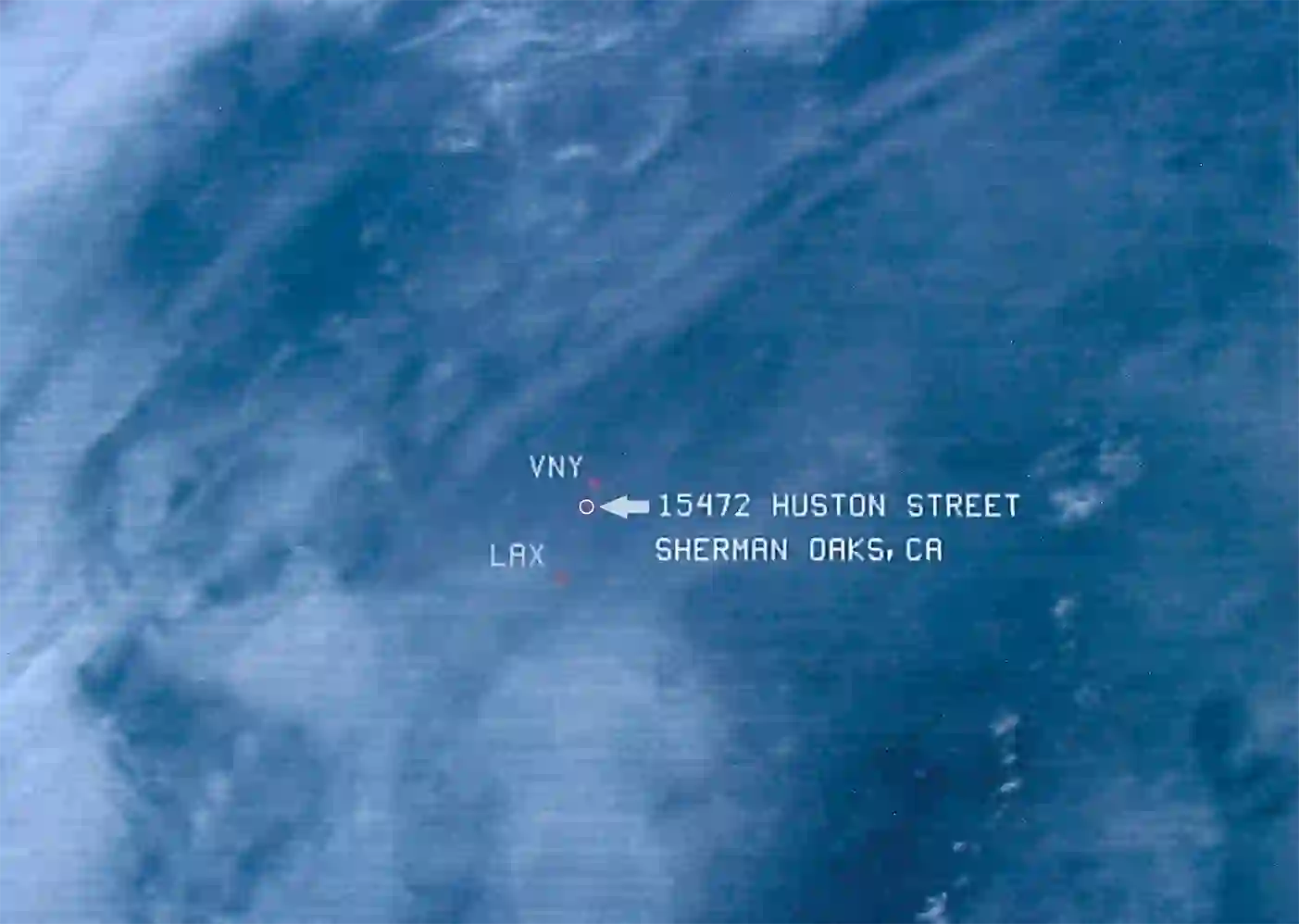
    1. Weather. Monsue testified March 10 was bright, cloudless, and sunny. 9 NOAA data from Van Nuys directly contradicts him: between 10:45 and 11:45 A.M.—the window spanning my views—skies were Broken to Overcast with three miles visibility. 10 The March 23 reconstruction 6 was run under Scattered skies 11 with twenty-five miles visibility. 12 More sun on March 23 meant more glare against the windows than I actually faced. GOES-5 satellite imagery from 11 A.M. on each morning shows the difference at a glance 720: a continuous overcast shroud sitting over the San Fernando Valley on March 10, broken-to-clear skies on March 23. Monsue and his LAPD photographer Wilson did not reconstruct my views — they restaged them on a sunnier day, under conditions the police theory required, and called it the same.
    2. The awning. The white metal sun shade above the living room window was raised more than a foot higher for the reconstruction than it had been on March 10—Monsue admitted as much on the stand. 13 Photographer Wilson confirmed that a lowered awning would have afforded a substantially better view, particularly with a hand cupped against reflection. 14
    3. The body position. Monsue placed his model where he claimed I had told him my mother was lying, 15 then admitted he had actually placed her where he remembered seeing bloodstains on a large area rug—a rug he himself discarded the evening of the murder and which was not present at the reconstruction. My mother had been removed to the hospital before he arrived, so he never personally observed where she lay. 17 Paramedic Jay Lovato could have told him; 16 Monsue did not ask. By setting the model behind the flagstone planter, he obscured her from my exact vantage point.
    4. The model. Monsue said he “DID SOME RESEARCH18 and chose a Van Nuys employee resembling my mother. He chose Doreen K. Music—at “110, MAYBE 120 POUNDS,21 considerably smaller than my 170-pound mother 22—and a member of the Van Nuys SID team assigned to this very investigation. 19 It was Music who claimed to have observed blood spatters on my clothing. 20 The State’s own bloodstain expert, Ronald R. Linhart, later testified that the inculpatory patterns Music and Monsue described were not present. 70 [Cf. § III above] Monsue chose a colleague directly involved in the case—one whose own findings could not survive peer review.
  3. In his Follow-Up report Monsue stated flatly that he could not see into the house through the rear windows “WITHOUT PLACING HIS FACE UP AGAINST THE GLASS,23 the clear implication being that I could not have either, and was therefore lying. On the stand he conceded that if I had gotten close to the window—close enough to touch it, without touching it—I could “CONCEIVABLY” have seen inside. 24 The categorical written claim collapsed under his own sworn concession.
  4. Monsue testified that glare and interior obstructions made it impossible to see my mother through the dining room window, 25 a conclusion that presupposed a specific position for her body. He admitted he and I had never discussed exact measurements during interrogation, 672 and that his position came from a “VERY ROUGH” diagram I sketched during ninety minutes of stressed questioning. 208

    His own partner refuted him. Detective Howard W. Landgren clearly saw the section of hardwood floor beside the planter 28—exactly where I told Monsue my mother’s head had been, and exactly where paramedic Lovato found her on arrival. Monsue himself wrote in his report that I had “OBSERVED THE TOP OF HIS MOTHER’S HEAD AND HAIR LAYING ON THE FLOOR OF THE HALLWAY.30 My account, Lovato’s testimony, and Landgren’s observation converge on the same spot.

  5. Monsue wrote and testified that the position of the sun shade required “SOMEONE LOOKING INTO THE WINDOW TO BEND DOWN AND CLIMB UNDER IT TO LOOK INTO THE WIDOW [sic].31 Landgren agreed the awning was broken and hanging low. 33 But Monsue then admitted he could look through that window simply by bending down on the sidewalk 32—without entering the five-foot planter and without climbing beneath the awning. Landgren could squat on the sidewalk and see in as well. “Climb under it” was rhetoric, not description.
  6. Monsue testified to seeing the reflection of the rear-yard storage shed in People’s 19—a photograph looking into the living room window. 320 From a position where that shed’s reflection appeared in the glass, the photographer’s sight line to the entry hall was at least partially blocked by the central fireplace island dividing living room, dining room, and entry hall. That was not where I was standing when I thought I saw my mother’s feet.

    By shifting slightly west along the outside of the living room window—as I had on March 10, working for the best view—I could see all the way through the house and, with the front door open, out onto the front porch. 321 From that vantage the front door was about ten feet 310 beyond where I thought I had seen her feet, and flanking the door on either side were seven-foot-tall frosted glass panes 322 that poured light onto the entry hall floor—back-lighting her and making her more, not less, visible from the rear yard. From the People’s 19 photographer’s position, at least one of those panes was hidden behind the fireplace island. The photograph did not show what I saw. It showed a different vantage—chosen, deliberately or carelessly, to maximize the appearance of obstruction.

The weather was wrong, the awning was wrong, the model was wrong, the vantage point was wrong, the measurements were guessed, and Monsue’s categorical written statements collapsed under his own sworn admissions. No single failure is dispositive. Six failures pointing in the same direction—toward a conclusion reached before the evidence was gathered—is something else.

Footnotes

1.
Testimony of LAPD detective Andrew R. Monsue (No. 20927)
Dennis H./William M. Juvenile Detention Hearing
April 4, 1983 – Page 24-25
Q:"AS YOU LOOKED IN THE WINDOW WHAT WERE YOU ABLE TO SEE?"
A:"I WAS ABLE TO SEE MY REFLECTION. I WAS ABLE TO SEE A PORTION OF THE COUCH WHICH RUNS ALONG THERE. AND THAT WAS IN -- I BELIEVE THERE WAS SOME DRAPERIES THAT WERE PARTIALLY DRAWN AND I COULD SEE THE DRAPES AND THAT WAS ABOUT IT."
Q:"WAS THE REST BLOCKED OFF BY REFLECTION?"
A:"YES, SIR, IT WAS." ...
A:" ..YOU COULD NOT SEE AT ALL INTO THE ROOM SHORT OF A FOOT OR TWO INSIDE THE ROOM, INSIDE THE WINDOW:"
2.

My father's longtime friend and fellow attorney appeared at our home the day after my arrest. His arrival was natural, almost inevitable—he had been my father's closest confidant for years. But he came with purpose: to help my father find answers to the questions that now haunted him. With quiet authority, he steadied my father, pointing him toward the clarity we all needed.

3.
Testimony of Robert F. Johnson
Trial
November 13, 1985 – Page 884
Q:"NOW, WHEN YOU LOOKED INTO THE RESIDENCE ON MARCH 11, 1983, WHEN YOU WERE STANDING IN THE SIDEWALK, DID YOU HAVE ANY DIFFICULTY SEEING INTO THE WINDOW?"
A:"NO."
4.
Testimony of Robert F. Johnson
Trial
November 13, 1985 – Page 887
Q:"NOW, AT THAT POINT IN TIME WHEN YOU LOOKED IN [the Living Room window from the rear yard], COULD YOU SEE MR. LISKER?"
A:"I COULD SEE THE LOWER PORTION OF HIS BODY, HIS LOWER PORTION OF HIS LEGS AND HIS FEET."
5.
Trial
November 14, 1985 – Page 979
Q:"WHEN YOU SHADOWED YOUR EYES [with your hands] ON THE OUTSIDE, THERE WAS ENOUGH FOR YOU TO SEE IN WITH THE HUMAN NAKED EYE WITHOUT ANY DIFFICULTY?..."
A:"THAT IS CORRECT."
and:
Trial
November 14, 1985 – Page 988-989
Q:"AT ANY TIME ON MARCH 23, 1983, WHEN YOU TOOK THE TWO PHOTOGRAPHS [of the Living Room window] THAT ARE DEPICTED IN PEOPLE'S 18 AND 19, DID YOU SQUAT DOWN AND COVER YOUR EYES AND LOOK INTO THAT WINDOW?"
A:"ONLY AS DEMONSTRATED IN PEOPLE'S 21 AND 22."
Q:"I DON'T UNDERSTAND YOUR ANSWER WHERE YOU SAID ONLY [as] DEMONSTRATED IN PEOPLE'S 21 AND 22. WHAT DID YOU MEAN?"
A:"I HAD LOOKED THROUGH. I DON'T REMEMBER SQUATING [sic] DOWN TO TAKE PICTURES THAT DAY. I REMEMBER HOLDING MY HANDS UP TO SEE INSIDE."
Q:"HOW DID YOU HOLD YOUR HANDS? JUST TO THE SIDES OF YOUR EYES?'' A: "
Q:"DID YOU EVER HOLD YOUR HAND ON TOP OF YOUR FOREHEAD?"
A:"COULD BE, SIR. I DON'T REMEMBER. I BLOCKED OUT THE SUNLIGHT SO I COULD SEE IN. I MIGHT HAVE USED DIFFERENT METHODS AT DIFFERENT TIMES, MAYBE."
Q:"UPON BLOCKING IT OUT, YOU HAD THE CLEAR VISION THAT WAS DEPICTED IN PEOPLE'S 21 AND 22?"
A:"YES, THAT IS APPROXIMATELY WHAT I COULD SEE."
and:
Trial
November 14, 1985 – Page 978
Q:"WHAT COULD YOU SEE [looking into the Dining Room window]?"
A:"BY HOLDING MY HANDS UP, I COULD SEE INTO THE HOME."
and:
Trial
November 14, 1985 – Page 979
Q:"WHEN YOU SHADOWED YOUR EYES ON THE OUTSIDE, THERE WAS ENOUGH [light inside] FOR YOU TO SEE IN WITH THE HUMAN NAKED EYE, WITHOUT ANY DIFFICULTY? YOU DIDN'T HAVE TO GO INSIDE AND INCREASE ANY LIGHT TO SEE INSIDE; IS THAT CORRECT?"
A:"THAT IS CORRECT."
6.
Trial, October 31, 1985
Page 265-266
Q:"NOW, THESE TWO PHOTOGRAPHS, PEOPLE'S 18 AND 19, WERE TAKEN ON WHAT DAY?"
A:"THESE TWO PHOTOS WERE TAKEN ON THE 23RD DAY OF MARCH 1983."
Q:"AND WERE YOU PRESENT WHEN THESE TWO WERE TAKEN?"
A:"YES, I WAS."
Q:"ALL RIGHT: AND DID YOU SPECIFICALLY PICK A PARTICULAR DAY AND TIME TO TAKE THESE PHOTOGRAPHS?"
A:"I CHOSE THAT PARTICULAR DAY BECAUSE IT WAS A THURSDAY [*] AND IT WAS THE TIME OF DAY IN WHICH BRUCE LISKER HAD INDICATED THAT HE HAD LOOKED INTO THAT PARTICULAR WINDOW. THE CONDITIONS OF THE SUN, THE TEMPERATURE, THE ENVIRONMENT IN TERMS OF DAMPNESS ON THE GROUND WERE VERY SIMILAR ON THAT PARTICULAR DAY WE TOOK THOSE PHOTOGRAPHS."
Q:"THE PHOTOGRAPHS YOU CAUSED TO BE TAKEN ON MARCH 23RD, 1983, AND DO THOSE ACCURATELY REFLECT THE CONDITIONS THAT YOU COULD SEE INTO THAT WINDOW?"
A:"YES."
and:
Trial, November 4, 1985
Page 452
Q:"WHAT WAS THE DATE THAT YOU RECONSTRUCTED THE POSITION THE MOTHER WAS LAYING IN AS YOU LOOKED THROUGH THE LIVING ROOM WINDOW?"
A:"MARCH 23RD."
and:
Trial, November 5, 1985
Page 494
A:"... ON THE 23RD OF MARCH, MR. [Robert] LISKER WAS ACCOMPANYING MYSELF AND THE PHOTOGRAPHER TO THE REAR OF THE LOCATION THAT MORNING AND VIEWED THOSE WINDOWS AT THE SAME TIME WE WERE VIEWING THEM"
Q:"ON THE 23RD?"
7.
Testimony of LAPD detective Andrew R. Monsue (No. 20927)
Trial
October 31, 1985 – Page 266
"THE CONDITIONS OF THE SUN, THE TEMPERATURE ... THE DAMPNESS OF THE GROUND WERE VERY SIMILAR."
9.
Testimony of LAPD detective Andrew R. Monsue (No. 20927)
Dennis H./William M. Juvenile Detention Hearing
April 4, 1983 – Page 23-24
A:"THAT PARTICULAR DAY [March 10, 1983] IT WAS A VERY BRIGHT, SUNNY DAY, CLEAR SKIES; VERY BRIGHT, VERY, VERY BRIGHT."
Q:"HAD IT BEEN BRIGHT FOR SOME TIME THAT MORNING LEADING UP TO NOON?"
A:"YES, IT HAD BEEN A VERY CLEAR DAY ALL DAY LONG.";
and:
Preliminary Hearing
December 7, 1983 – Page 245
A:"... THE SUN, IT WAS A VERY BRIGHT SUNNY DAY, NO CLOUDS IN THE SKY.";
and:
Trial
November 6, 1984 – Page 98
"... THEY DID HAVE BRIGHT, BRIGHT SUNLIGHT THAT PARTICULAR DAY."
10.
National Oceanic and Atmospheric Administration (NOAA), Surface Weather Observations
March 10, 1983
The following observations were made at the Van Nuys Airport, FAA Station ("FAA Van Nuys"), 3.16 miles NNW of our house.
Analysis of the Surface Weather Observation entries shown, according to NOAA's "Key to ASOS Weather Observations":
Type:"SA" indicates these are scheduled hourly record observations, rather than special observations, which are made when a significant change in the weather between regular observations is being noted.
Time:Conversion from GMT to PST time requires subtracting eight hours from GMT to yield PST. Therefore, "1845" hours and "1945" hours (GMT) on the chart above are actually 1045 and 1145 hours (PST), respectively. I believe I peered through the living and dining room windows sometime shortly after 11:00 a.m. on March 10, 1983, and Monsue reported looking through the windows at approximately 11:45 a.m.
Observation:"-XE200" indicates Partially ("-") Obscured Sky ("X") at an estimate ("E") altitude of 200 feet ("200"). "BKN" (10:45 a.m. PST) indicates Broken Sky Cover, defined as six-tenths to nine-tenths of the sky being covered and possibly concealed by obscuring phenomena aloft. "OVC" (11:45 a.m. PST) indicates Overcast Sky Cover, defined as ten-tenths (i.e., all) of the sky being covered and possibly concealed by obscuring phenomena aloft.
Visib:"3" indicates it was possible for the observer to see three statute miles before obscuring phenomena intervened and prevented seeing further.
Cnd:"H" indicates that it was Hazy. (This indication is present only when visibility is less than seven statute miles.)
Temp:"65" indicates it was sixty-five degrees Fahrenheit when these observations were made.
Hum:"M" indicates that this data is missing; it was not recorded.
Wind Dir:"16" (10:45 a.m. PST) indicates the wind was heading 160 degrees from true north; SSE. "10" (11:45 a.m. PST) indicates the wind was heading 100 degrees from true north; SW.
Wind Spd:"08" (10:45 a.m. PST) indicates a wind speed of eight knots; 9.2 statute miles per hour. "10" (11:45 a.m. PST) indicates a wind speed of 11.5 miles per hour.
Alt. Setting:"993" (10:45 a.m. PST) indicates an atmospheric pressure of 39.93 inches of mercury. "992" (11:45 a.m. PST) indicates an atmospheric pressure of 39.92 inches of mercury.
Comments:"H3" indicates that Haze ("H") limited visibility to three ("3") statute miles.
Tot Sky Cov:"8" (10:45 a.m. PST) indicates eight-tenths of the sky was covered by obscuring phenomena aloft. "10" (11:45 a.m. PST) indicates ten-tenths (i.e., all) of the sky was covered.
Opaque Sky Cov:"8" (10:45 a.m. PST) indicates eight-tenths of the sky was actually concealed from view by obscuring phenomena aloft. "10" (11:45 a.m. PST) indicates ten-tenths (all) of the sky was actually concealed from view.

These data, if cryptic, plainly reveal the police assertion of March 10 being "A VERY BRIGHT, SUNNY DAY, CLEAR SKIES," "VERY BRIGHT, VERY, VERY BRIGHT" with "NO CLOUDS IN THE SKY" as inaccurate. Police lied about the weather conditions on this Broken/Overcast day to manufacture inconsistencies in my account.

These NOAA Surface Weather Observations were never obtained by anyone involved in this case until I did so myself, on February 25, 1998.

11.
NOAA National Weather Service, Observing Handbook No. 7: "Surface Observations", March 1994, U.S. Department of Commerce
Section 3.2.17, Sky Cover Classifications
b)"SCATTERED. A sky cover of 0.6 through 0.9 at and below the level of a layer aloft."
d)"OVERCAST. A sky cover of 1.0 (10/10) at and below the level of a layer aloft."
12.
National Oceanic and Atmospheric Administration (NOAA), Surface Weather Observations
March 23, 1983
Time:These observations, made at "1845" and "1945" hours GMT (10:45 and 11:45 a.m. PST, respectively), approximate the time I peered through the rear windows on March 10. Police made their photos at approximately 12:00 noon on March 23, so the 11:45 a.m. entry is most indicative of conditions at that time.
Observation:"40SCT" indicates Scattered Conditions ("SCT") at a forty-foot altitude ("40").
Visib:"25" indicates a twenty-five-mile visibility.
Temp:"54" indicates it was fifty-four degrees Fahrenheit at 10:45 a.m. PST. "58" indicates it was fifty-eight degrees Fahrenheit at 11:45 a.m. PST.
Alt. Setting:"009" indicates an atmospheric pressure of 30.09 inches of mercury.
Tot Sky Cov:"2" (10:45 a.m. PST) indicates that two-tenths of the sky was covered by obscuring phenomena aloft. "4" (11:45 a.m. PST) indicates four-tenths.
Opaque Sky Cov:"2" (10:45 a.m. PST) indicates that two-tenths of the sky was concealed by obscuring phenomena aloft. "4" (11:45 a.m. PST) indicates four-tenths.

These observations were made on the day of the police photo "reconstruction," March 23, 1983, at the Van Nuys Airport, FAA Station ("FAA Van Nuys"), 3.16 statute miles NNW of the Lisker residence.

Again, cryptic data — but plainly showing that a good deal more sunshine and visibility existed on March 23 (when police took their crucial photographs supposedly portraying my "impossible" views) than on the Broken/Overcast March 10, when I did in fact see my mother through the rear living and dining room windows.

13.
Testimony of LAPD detective Andrew R. Monsue (No. 20927)
Trial
November 4, 1985 – Page 435-436
Q:"AND WHEN YOU WERE TALKING ABOUT THAT AWNING, THAT AWNING WAS LOWER ON ONE SIDE THAN ON THE OTHER SIDE ON THE DATE IN QUESTION?"
A:"THE DATE IF YOU ARE REFERRING TO 3-10, YES."
Q:"WHICH SIDE WAS LOWER THAN THE OTHER SIDE?"
A:"IT WAS THE LEFT-HAND SIDE AS YOU FACE THAT WINDOW LOOKING NORTH."
Q:"OKAY. AND HOW MUCH LOWER WAS THE AWNING ON THE OUTSIDE OF THE WINDOW ON THE LEFT-HAND SIDE THAN THE AWNING ON THE RIGHT SIDE OF THE WINDOW?"
A:"I WOULD ESTIMATE A FOOT. MAYBE A FEW INCHES MORE THAN THAT."
Q:"SO THE PHOTOGRAPH THAT DEPICTS THE WINDOW IN PEOPLE'S 18 DOES NOT ACCURATELY DEPICT THE CONDITION OF THE AWNING ON THE DATE OF MARCH 10, 1983; IS THAT CORRECT?"
A:"...IT HAD BEEN ALTERED SOMEWHAT, YES.";
and:
Trial
October 31, 1985 – Page 266
Q:"IT SHOWS IN THE PHOTOGRAPH [People's 18 or 19] SOME TYPE OF AN AWNING. WAS THAT PHOTOGRAPH -- WAS THE AWNING THERE IN THAT CONDITION ON THE 10TH OF MARCH?"
A:"THE AWNING WAS SLIGHTLY MODIFIED HERE. IT WAS RAISED A LITTLE BIT HIGHER THAN IT WAS ON THE DATE THAT WE WERE RECREATING THE CRIME SCENE.";
and:
Trial
November 5, 1985 – Page 510
A:"WELL THE AWNING WAS AT AN ANGLE CROOKED THIS WAY, IN ADDITION TO AN ANGLE FROM THE HOUSE IN THIS FASHION."
Q:"BECAUSE ONE SIDE WAS LOWER THAN THE OTHER, YOU MEAN?"
A:"THAT IS CORRECT. THE LOWEST PORTION OF IT WAS ABOUT THE HEIGHT, IF I MIGHT STAND UP IT WOULD BE EASIER THAN TRYING TO DESCRIBE. HIT ME ABOUT IN THIS AREA."
Q:"THAT IS CALLED THE CROTCH AREA."
A:"AND THE HIGHEST PORTION WOULD STRIKE ME SOMEWHERE IN THE NEIGHBORHOOD OF ABOUT MIDSECTION, ABOUT THIS AREA. THERE WAS A SLIGHT ANGLE TO ONE SIDE ON THE LEFT HAND SIDE"
14.
Testimony of LAPD SID photographer Michael J. Wilson
Trial
November 14, 1985 – Page 993
Q:"IF YOU WERE BENT DOWN BELOW THE POINT WHERE THE AWNING HANGS DOWN AT THE WINDOW AND YOU WERE LOOKING BELOW THE AWNING, WOULD YOU BE ABLE TO SEE ANY MORE BECAUSE THE AWNING WOULD CAST MORE SHADOW ON THE WINDOW?"
A:"IF YOU WERE ABLE TO BLOCK OUT SOME WAY THE INFLUENCE OF THE BRIGHT AWNING YOU COULD SEE FURTHER INTO THE HOME, INTO THE DARKENED AREA.";
and:
id. at page 995
Q:"IF YOU ARE BELOW THE LEVEL OF THE AWNING AND YOU ARE SHADING [with your hand] ON THE TOP OF YOUR EYES AND YOU ARE CLOSER THAN TEN FEET, YOUR VISION WOULD IMPROVE, CORRECT?"
A:"YES."
Q:"SO BY SHADING THE TOP OF YOUR EYES YOU ARE CUTTING OFF THE REFLECTION FROM THE AWNING?"
A:"YES."
15.
Testimony of LAPD detective Andrew R. Monsue (No. 20927)
Trial
November 12, 1985 – Page 760-761
Q:"AND THERE IS A PERSON IN THE PHOTOGRAPH. DID YOU INSTRUCT THAT PERSON TO BE THERE?"
A:"YES. I INSTRUCTED THAT YOUNG LADY TO LAY IN THE POSITION AS BEST I COULD RECONSTRUCT THE LOCATION AND IN THE MANNER IN WHICH SHE LAID AS BRUCE LISKER HAD TOLD ME ON MARCH 10TH."
Q:"ALL RIGHT. WHEN YOU WENT BACK THERE, DID YOU REMEMBER THE SPOTS WHERE THERE WERE STAINS ON THE CARPET?"
A:"YES, I LAID HER AS CLOSE AS I POSSIBLY COULD TO THAT AREA OF THE HALLWAY."

That is, he laid the model in relation to where he'd remembered seeing blood on the entry hall rug — a rug that he assisted my dad in throwing away thirteen days prior, as my dad's testimony confirmed:

Testimony of Robert B. Lisker
Trial
November 13, 1985 – Page 919-920
Q:"NOW, DID YOU DO ANYTHING WITH THAT CARPET ON MARCH 10, 1983?"
A:"YES, I DID."
Q:"AND DID ANYBODY HELP YOU DO ANYTHING WITH THAT CARPET ON MARCH 10, 1983?"
A:"YES, THEY DID."
Q:"WHO HELPED YOU?"
A:"DETECTIVE MONSUE."
Q:"WAS ANYBODY ELSE PRESENT?"
A:"DETECTIVE LANDGREN." ...
Q:"WHAT WAS DONE WITH THAT CARPET?"
A:"THE CARPET WAS ROLLED UP ALONG WITH THE UNDERLINER AND PUT IN THE TRASH CAN.")
16.
Preliminary Hearing (Clerk's Transcript -- Supplemental), October 6, 1983
Page 104-105
Q:"ALL RIGHT. ABOUT HOW FAR WOULD YOU SAY [Mrs. Lisker's head] EXTENDED BEYOND THAT IMAGINARY NORTH/SOUTH LINE [i.e., an extension of the planter's eastern edge, out towards the front door]?"
A:"IT WAS VERY PROXIMAL TO THAT CORNER. IT COULDN'T HAVE BEEN ANY FARTHER THAN HALF-A-FOOT TO A FOOT."
and:
Trial (On Motion), November 29, 1984
Page 308
Q:"THEN, DID [Mrs. Lisker's head] EXTEND BEYOND THE EDGE OF THE PLANTER TO THE EAST?"
A:"JUST SLIGHTLY."
Q:"BY HOW MUCH?"
A:"NOT MORE THAN A FEW INCHES."
17.
Testimony of LAPD detective Andrew R. Monsue (No. 20927)
Dennis H./William M. Juvenile Detention Hearing
April 4, 1983 – Page 25
Q:"INCIDENTALLY, WHEN YOU ARRIVED, HAD THE PARAMEDICS ALREADY TAKEN THE VICTIM?"
A:"YES. THEY HAD ALREADY TRANSPORTED HER."
18.
Testimony of LAPD detective Andrew R. Monsue (No. 20927)
Trial
November 12, 1985 – Page 761
Q:"HOW TALL IS THAT PERSON WHO IS DEMONSTRATING IN THAT PHOTOGRAPH [People's Exhibit 56-B]? ”
A:"SHE WAS FIVE FOOT FOUR INCHES TALL. I DID SOME RESEARCH AND I TRIED TO APPROXIMATE THE VICTIM'S HEIGHT AND FIND THE PERSON THAT WAS SIMILAR IN HEIGHT TO THE VICTIM."
19.
Testimony of LAPD detective Howard W. Landgren (No. 13668)
Preliminary Hearing
October 6, 1983 – Page 56-57
Q:"NOW, THE KNIVES THAT WERE FOUND ON THE FRONT PORCH" ... "WHO DID YOU SEE PICK THEM UP, IF YOU RECALL?"
A:"AS I RECALL, IT WAS OUR CRIMINALIST, DORENE MUSIC, THAT IS M-U-S-I-C."
Q:"THE OTHER KNIVES THAT YOU SAID WERE FOUND ON THE LOCATION" ... "DID YOU SEE WHO PLACED THOSE INTO EVIDENCE ENVELOPES?"
A:"AGAIN, I BELIEVE IT WAS DORENE MUSIC, THE CRIMINALIST."
Q:"YOU'RE NOT SURE ABOUT THOSE TWO KNIVES?"
A:"NO, I'M FAIRLY CERTAIN THAT SHE IS THE ONE THAT PICKED THEM UP AND PLACED THEM IN THE ENVELOPES.";
And:
Testimony of LAPD detective Andrew R. Monsue (No. 20927)
Trial
November 5, 1985 – Page 496
A:"THE TROPHY WAS RECOVERED FROM THE RESIDENCE BY A MRS. DOREEN MUSIC WHO IS A MEMBER OF OUR SCIENTIFIC INVESTIGATION DIVISION."
20.
LAPD Analyzed Evidence Report, dated 3-14-83 (analysis completed 3-21-83)
This report, authored and signed by Doreen Music, indicates she is the one who "found" the spatters on my clothing — findings at odds with State bloodstain expert Linhart's detailed analysis.
21.
Testimony of LAPD detective Andrew R. Monsue (No. 20927)
Trial
November 12, 1985 – Page 764
Q:"THIS PERSON THAT LAID DOWN FOR THIS RECONSTRUCTION APPROXIMATELY HOW MUCH DID THAT PERSON WEIGH?"
A:"SHE WAS A TINY GIRL. MAYBE 110, 120 POUNDS."
22.
Los Angeles County Autopsy Report No. 83-3174 (Lisker, Dorka G.)
Page 2; Coroner's Fingerprint Exemplar; Coroner's Case Report – Page 1
23.
LAPD Follow-Up Investigation
Page 7
"DETECTIVES ATTEMPTED TO LOOK INTO ALL THE WINDOWS IN THE REAR OF THE LOCATION, BUT COULD NOT SEE INSIDE THE HOUSE, WITHOUT PLACING HIS FACE UP AGAINST THE GLASS . ...DETECTIVES ALSO EXAMINED THE LARGE WINDOW OF THE DINING ROOM AND ALSO NOTED THAT SOMEONE LOOKING THROUGH THE WINDOW WOULD BE REQUIRED TO GET VERY CLOSE AND TOUCH THE WINDOW IN ORDER TO SEE INTO THE HOUSE. THE GLARE FROM THE SUN, COUPLED WITH THE PATIO BEING PARTIALLY COVERED WITH A ROLL-UP CANVAS COVER."
24.
Testimony of LAPD detective Andrew R. Monsue (No. 20927)
Trial, November 6s 1984
Page 99
Q:"SO ARE YOU SAYING THAT IF HE HAD GOTTEN UP CLOSE TO THE WINDOW THAT HE MIGHT HAVE BEEN ABLE TO SEE IN IT?
A:"IT IS CONCEIVABLE, YES, SIR, IN MY MIND. I PROBABLY COULD HAVE SEEN INSIDE THE RESIDENCE IF I HAD PUT MY FACE UP TO EACH WINDOW AND LOOKED IN. THAT IS CORRECT."
25.
Testimony of LAPD detective Andrew R. Monsue (No. 20927)
Trial
October 31, 1985 – Page 272-273
BY MR. RABICHOW:"WHAT, IF ANYTHING, STOPPED YOU FROM SEEING IN [the Dining Room window]?"
A:"A NUMBER OF THINGS... THE DINING ROOM TABLE, THE PLANTS... INSIDE OF THE PLANTER AND THE SIZE AND SHAPE OF THE PLANTER IN RELATIONSHIP TO WHERE HE HAD STATED HE HAD OBSERVED HIS MOTHER."
28.
Testimony of LAPD detective Howard W. Landgren (No. 13668)
Preliminary Hearing
October 6, 1983 – Page 68-69
Q:"SO, YOU HAD NO DIFFICULTY WHEN YOU LOOKED THROUGH AND MOVED A LITTLE TO THE WEST, YOU COULD SEE THE FLOOR RIGHT NEXT TO THE PLANTER?"
A:"YES."
30.
LAPD Follow-Up Investigation
Page 5
31.
LAPD Follow-Up Investigation
Page 4
32.
Testimony of LAPD detective Andrew R. Monsue (No. 20927)
Trial
November 4, 1985 – Page 446
A:"... IN BETWEEN THAT WINDOW AND THE SIDEWALK IS A PLANTER AND I BENT DOWN SO I COULD LOOK UP UNDERNEATH THE AWNING WHILE I STOOD ON THE SIDEWALK. I BENT AT THE WAIST AND BENT MY KNEES AND LOWERED MYSELF DOWN SO I WAS CAPABLE OF LOOKING UP UNDERNEATH THAT AWNING."
33.
Testimony of LAPD detective Howard W. Landgren (No. 13668)
Preliminary Hearing
October 5, 1983 – Page 40-41
Q:"AT THE TIME THAT YOU MADE THOSE OBSERVATIONS, DID YOU MAKE ANY OF THOSE OBSERVATIONS BY SQUATTING DOWN AND ATTEMPTING TO LOOK INTO THAT WINDOW?"
A:"THE ONLY TIME THAT I SQUATTED DOWN TO LOOK INTO THE WINDOW WOULD BE ON THE WINDOW LOOKING INTO THE LIVING ROOM AREA. THERE IS AN AWNING OVER THAT WINDOW WHICH WAS BROKEN AND HANGING DOWN. STANDING UPWARD AND LOOKING DIRECTLY INTO IT, YOU COULDN'T SEE INTO IT. SQUATTING DOWN TO LOOK UNDER THE AWNING WOULD BE THE ONLY TIME THAT I WAS SQUATTING."
Q:"AND DID YOU DO THAT FROM VERY CLOSE TO THE WINDOW?"
A:"NO."
Q:"HOW FAR AWAY WERE YOU FROM THE WINDOW AT THE POINT WHERE YOU LOOKING [sic] UNDER THE PART OF THE BROKEN AWNING TO LOOK INTO THE WINDOW?"
A:"THERE IS A PLANTER WHICH I WOULD ESTIMATE AT APPROXIMATELY FOUR TO FIVE FEET COMING OUT FROM THE WINDOW. THE PLANTS ARE ON THE GROUND AND THEN ADJACENT TO THE PLANTS THERE IS A SIDEWALK WHICH I WAS STANDING ON."
70.

Summarizing Linhart's findings [Notes #53, 57, 61, 62, 63], he found: On my flannel shirt, six droplets; On my right Pacer tennis shoe, one droplet approximately 1 x 2 millimeters in diameter; and on the left Pacer tennis shoe, one droplet approximately 2 x 3 millimeters.

208.
Testimony of LAPD detective Andrew R. Monsue (No. 20927), Preliminary Hearing
December 7, 1983 – Page 258
A:"THE INITIAL INTERVIEW I WOULD ESTIMATE TO BE ABOUT AN HOUR AND A HALF..."
310.

LAPD Officer's Statement (Prado)
"... VICT WAS APPROX. 10' FROM N/FRT DOOR ON THE HALLWAY FLOOR."

My mom was on the entry hall floor, inside the house, approximately ten feet from the front door separating the indoors entry hall from the outdoors porch and driveway

320.
Trial
Trial, October 31, 1985 – Page 268-269
According to my attorney's examination of the photographs, this position was "IN TOTAL CONTRADICTION" with his understanding of where I'd stood outside the window.
321.
Trial, November 4, 1985, page 437
As depicted in Defense Exhibit ."B", a photograph taken through the house from the front porch, out through the rear living room window into the rear yard. This is essentially the reverse angle of my own view into the living room window, through which I'd seen my mom on the entry hall floor.
322.
Testimony of LAPD detective "Andrew R. Monsue (No. 20927) describing the glass panels which ran the height of the front door and were situated to either side of it.
Trial
October 31, 1985 – Page 248
A:"THERE WERE TWO PANELS THAT RUN PARALLEL TO THE DOOR ALONG BOTH SIDES AND THEY WERE FROSTED GLASS.”
672.

Throughout the Lisker Case Analysis (LCA),' I use the term 'interrogation', rather than 'interview' to describe my questioning at the hands of detective Monsue on March 10, 1983. This phrasing makes the necessary distinction between a police officer asking questions of a witness (an interview), and their questioning of a suspect (an interrogation). It is clear from the actions of police, and the result of those actions -- my accusation, arrest, set-up and conviction for this crime -- that I was an interrogated suspect from the first moments of police contact. [Cf. § IV., Introduction]

The Appellate Court later found that I was indeed in custody before I was taken to Van Nuys police station and questioned, and had been entitled to my Miranda warnings before questioning began [Note #268].

720.

Monsue testified under oath that March 10, 1983 was "A VERY BRIGHT, SUNNY DAY, CLEAR SKIES; VERY BRIGHT, VERY, VERY BRIGHT... A VERY CLEAR DAY ALL DAY LONG" and "...IT WAS A VERY BRIGHT SUNNY DAY, NO CLOUDS IN THE SKY" and "...THEY DID HAVE BRIGHT, BRIGHT SUNLIGHT THAT PARTICULAR DAY."

Did he lie? Here are the satellite images from the morning he was describing. March 10 is on the left. You be the judge.

He also claimed March 23, 1983 — the day he and LAPD photographer Wilson came back to stage a photo “reconstruction” of my views — was "VERY SIMILAR" to March 10 in the condition of the sun.

Again, here's the slider. You be the judge.
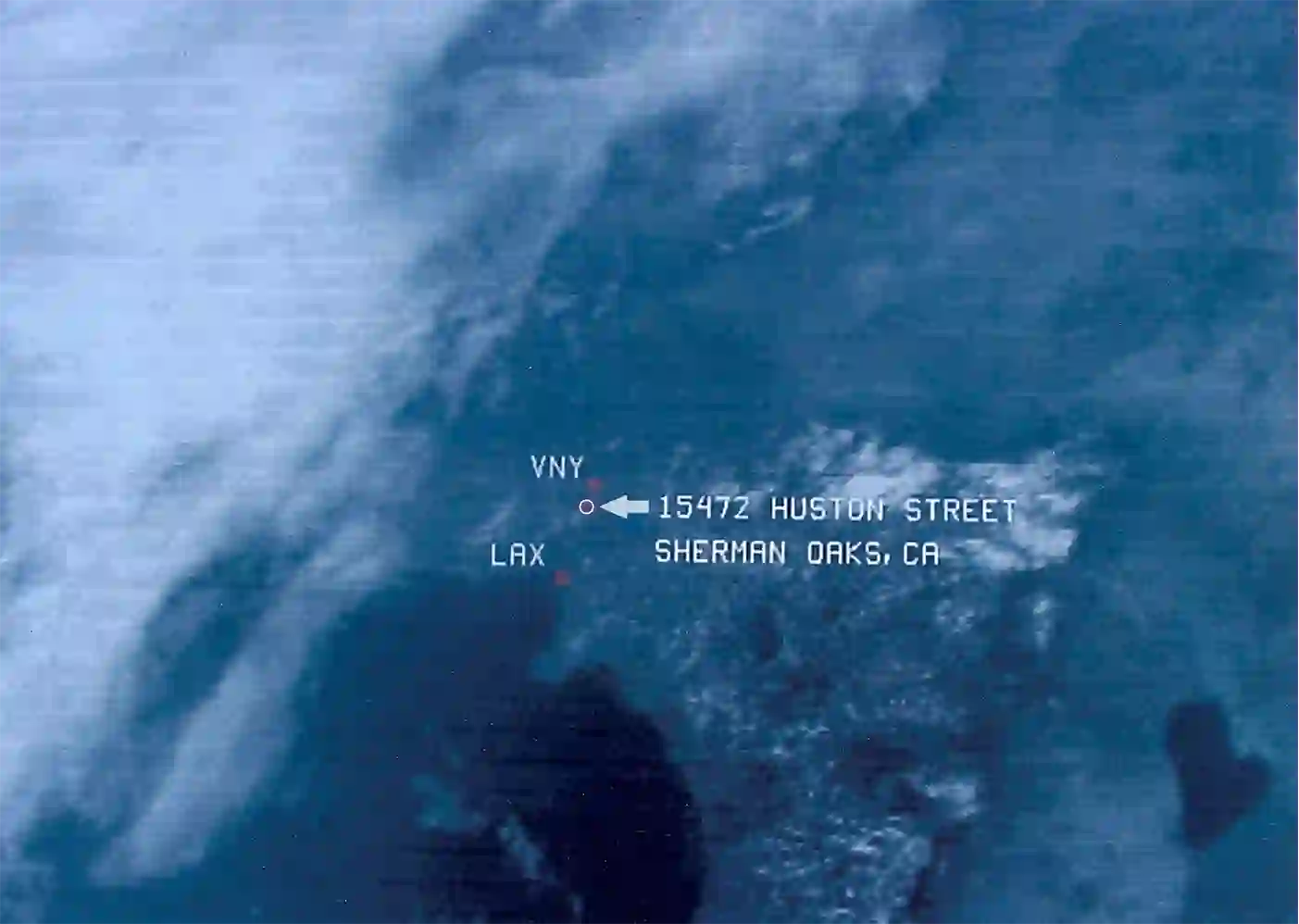
GOES-5 satellite image, 11:00 A.M. on March 23, 1983 — scattered cloud over the Pacific and U.S. West Coast; broken-to-clear skies over the San Fernando Valley. The conditions Detective Monsue and LAPD photographer Wilson chose for their staged reconstruction of Bruce's views through the rear windows. GOES-5 satellite image, 11:00 A.M. on March 10, 1983 — continuous overcast covering the U.S. West Coast and blanketing the San Fernando Valley. The cloud conditions Bruce actually faced when he walked the perimeter of his parents' house. March 10, 1983 — my views March 23, 1983 — police photos
GOES-5 imagery, 11:00 A.M. each date. Drag the handle left or right.

About the satellite. GOES-5 was a NASA weather satellite parked 22,300 miles above the Pacific, photographing the Western Hemisphere every thirty minutes from 1981 to 1990 — too high to falsify, too automated to bribe. The two frames above are its 11:00 A.M. captures from March 10 and March 23, 1983.