The Few. The Proud.
The Forsworn.
Three United States Marines wore the Eagle, Globe, and Anchor. One spent his life keeping what it stood for. Two of them broke their oath—and helped bury an innocent boy under twenty-six years of manufactured evidence, fabricated testimony, and lies that did not stop after the verdict.
Robert Bruce Lisker enlisted in the United States Marine Corps at sixteen, on December 2, 1942. Eleven months later, at seventeen, he waded ashore at Betio—the fortified southern islet of Tarawa Atoll—a Private First Class with the 8th Marines, 2nd Marine Division, on the second day of one of the bloodiest amphibious assaults in American military history. Operation Galvanic. A landing across coral and machine-gun fire that turned out to be a model of how to do almost everything wrong, and into which young men like my father walked anyway, because that is what Marines do.
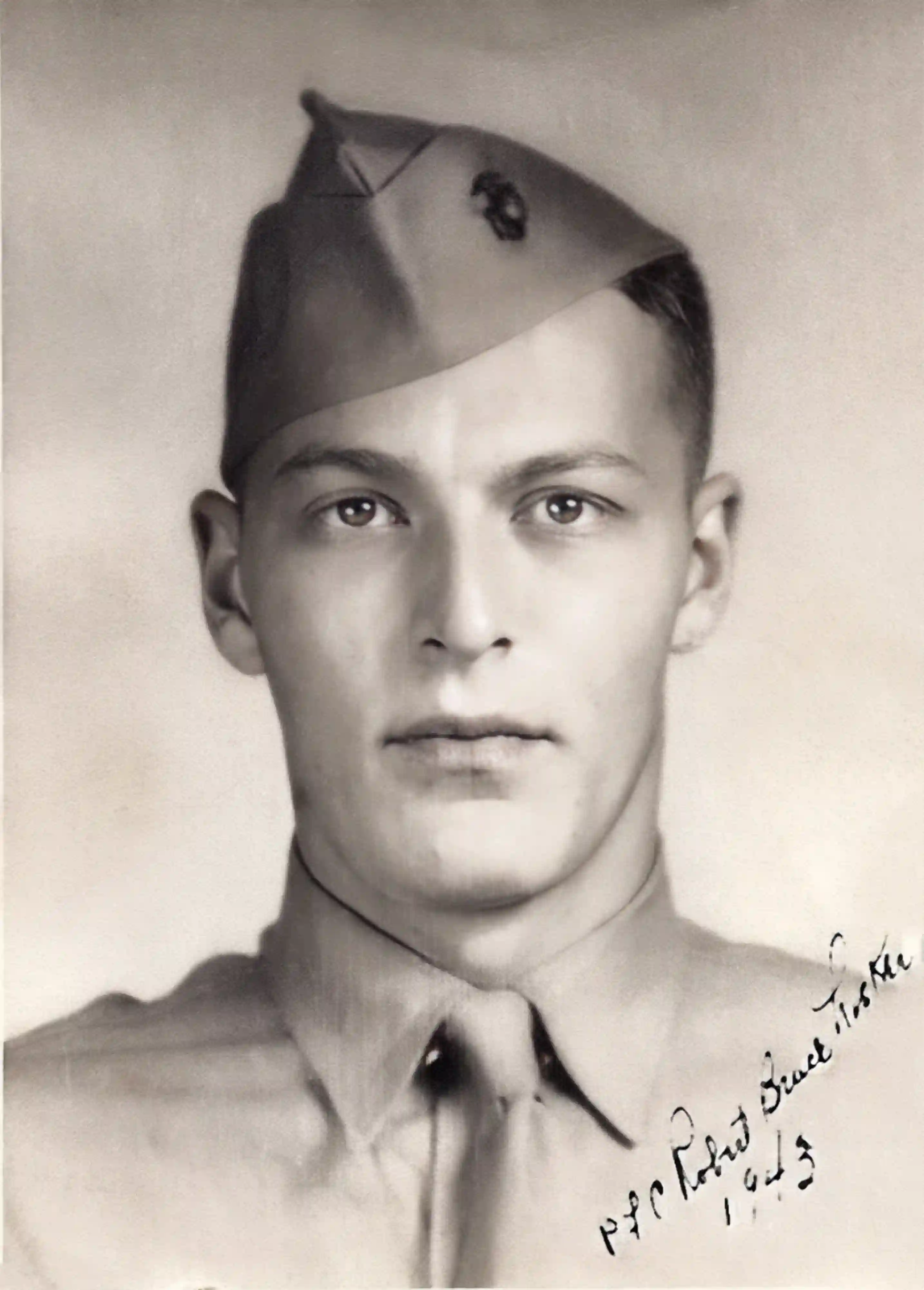
He had volunteered for parachute training. Only four Marine Parachute Battalions saw combat in the entire war, and he trained for one of them — until he injured both ankles at Camp Gillespie. The injury ended his Paramarine career and sent him to the infantry that would land at Betio.
He came out of it with a Purple Heart.
He came home. He married my mother. They built a house in the hills, up in Stone Canyon, and a quiet life in greater Sherman Oaks. They were married thirty-seven years.
On March 10, 1983, in a single day, he lost the two people most beloved to him. His wife of thirty-seven years, murdered in their home. His only son, seventeen years old, locked up for a crime he did not commit.
What I want to write about is not the murder. It is what my father did next.
He did not break.
The StandardHonor. Courage. Commitment.
There are three Marine Corps Core Values, drilled into every Marine from day one in uniform. They are not a slogan. They are an oath worn around the neck of each one for the rest of his or her life.

Honor · Courage · Commitment
Never Lie. Never Cheat. Never Steal.
Keep your word. Do the right thing when no one is watching. Respect human dignity. Honor is the bedrock—everything else rests on it.
Mental, Moral, and Physical.
The strength to act on integrity when it is unpopular, costly, or means standing alone. Moral courage is what turns integrity from a belief into a behavior.
Leave No Marine Behind.
Devotion to corps, country, and the Marine standing next to you. The discipline and selflessness to carry the man on your left and the man on your right. To the gate. To the grave.
Three values. Three Marines. My father lived them every day until the day he died. The other two—both former Marines themselves—violated every one.
Marine IThe Man Who Did Not Break
What Robert Lisker carried on March 10, 1983 was a weight that should have broken any man. His wife was butchered in their home. His seventeen-year-old son was in custody for the murder. Some of the people he had counted as friends turned away from him in the courthouse halls—ducking him, putting distance between his disgrace and theirs.
He held.
He did not collapse into the grief his enemies were certain he would. He did not curse his son. He did not curse the Corps. He did not curse God. He worked the phones. He worked with the lawyers the court appointed. He got to work—quietly, methodically, the way a Marine packs a pack.
He went directly to the lead detective, Andrew Monsue—who, my father did not yet know, was himself a former Marine—and pleaded with him to take a second look. You have the wrong person. My son did not do this. Look at Mike Ryan. Take a fresh look.
It fell on deaf ears.
My father stood in front of a man who, like him, had once earned the eagle, globe, and anchor—and asked him to look again. The man who had once earned it turned away.
Marine IIDetective Andrew Monsue
Andrew Monsue was a former Marine. A Vietnam veteran. A man with, in the Los Angeles Times' phrasing, “a gruff military bearing.” A man whose oath of enlistment, like my father's, had once included the words I will faithfully discharge the duties of the office on which I am about to enter.
Here is what that oath looked like in practice.
He Caught Mike Ryan in Lies. He Let It Go.
When my father pointed him at Mike Ryan, Monsue did the right first step: he flew, on the public dime, to Mississippi. He tracked Ryan to a youth detention facility in Harrison County, and on May 4, 1983, sat down with him with a tape recorder running. The tape still exists. It is a damning artifact.
“... that's bullshit. I went to the motel. You checked in at 3:00 o'clock in the afternoon.”
Monsue had not yet told Ryan when the murder had happened. Ryan offered him a time anyway. He had checked into the Hollywood Tropics motel on Sunset Boulevard, he told Monsue, at 11 a.m. on the day of the murder—twelve miles from our house, almost exactly the hour my mother was being killed. A perfect alibi, if true. But Monsue had pulled the motel's registration records before he ever boarded the plane. Ryan had checked in at 3 p.m., four hours later, under the alias “Mark Smith.” Four hours. Plenty of time to murder my mother, work his way the twelve miles to Hollywood and check into the motel under a false name.
A Knife Fight That Morning, Stabbed in the Shoulder
Ryan then volunteered, unprompted, that he had been in a “knife fight” that morning with “some black guy,” whom he claimed to have stabbed in the shoulder. He had no name for the man. No location. No corroboration. It was an alibi pre-loaded for any blood witnesses might have seen on him after the actual attack—the volunteered alibi of a man covering blood that was not his.
$52 for Five Days. It Did Not Add Up.
Monsue confronted Ryan on his finances. Ryan claimed he had left Mississippi for Los Angeles with about $52—for what was, by his own itemized accounting, a five-day trip including food, drugs, cigarettes, bus fare, and the motel he himself priced at $21 per night. The arithmetic was impossible. On tape, Monsue said it plainly: “Something is not jiving here.” He was right. It was not jibing.
Heap of Trouble, or Damn Good Witness.
And then he did something I still cannot reconcile with the oath he had taken. After catching Ryan in a lie about the time of the murder, after hearing him volunteer a pre-loaded blood alibi, after catching him in a financial story that mathematically could not be true—Monsue offered Ryan an explicit binary. The words are on the tape:
“You are either gonna go back to California with me, cause you are gonna be in a heap of trouble or you are gonna be a [damn] good witness for me. O.K.? You are not gonna be either or. You are gonna be one or the other.”
He had already chosen his suspect. He had chosen me. He had chosen me before he flew to Mississippi. He chose me on tape, in front of the actual murderer—by framing Ryan's options as a binary: be the witness against Bruce, or be the one brought back to California in custody. Then he flew home without the man whose story did not jibe.
Monsue's own notes from that trip would later state that Ryan had been “convincingly cleared” by his investigation. That phrase, written in his own hand after the interview you have just read excerpts of, is in the federal record.
ConsequencesWhat Came of Letting Ryan Walk.
Three years later, in 1986, in San Francisco, Mike Ryan followed a young woman home from her swing shift at a doughnut shop, drew a knife on her, tried to drag her toward a beach, and—when she broke and ran—chased her up the front steps of her own home and slashed repeatedly at her neck and throat. She survived because she fought him off with the down jacket she was carrying, and because her mother heard her screams and came out. Ryan was arrested half an hour later. Her name is on a sworn declaration in the federal record; I will not put it on this page.
What I will put on this page is the obvious fact. Andrew Monsue had Mike Ryan in a room in May 1983, on tape, in three documented lies, and let him walk. Three years later, the young woman Mike Ryan tried to kill in San Francisco would not have had to fight for her life if Monsue had arrested him in 1983.
Mike Ryan died by suicide on June 28, 1996.
The PatternThe Lies Did Not Stop With Ryan.
Monsue testified—under oath, and in his written reports—that March 10, 1983 was a bright, sunny day, and that the resulting glare on the rear living-room window would have made it impossible for me to see my mother's body from outside, as I had told police I had. The National Oceanic and Atmospheric Administration's archived weather data for Sherman Oaks that day says otherwise. It was overcast that morning. It cleared by the time the police took their crime-scene photographs. When I had looked through that window, it was overcast. I could see in fine.
Monsue's “glare” was, at best, an unverified assumption from a homicide detective who encountered the window hours after I did, after conditions had changed, and who never consulted the weather records. At worst, it was a lie engineered to manufacture yet another ‘contradiction’ in my account—to brand me a liar, and from a pile of such ‘lies,’ a killer. Either way, the weather data is in the federal record.
He testified that the bloody footprints found at the crime scene “resembled quite closely” the treads of my size-8 sport shoes. They did not. An LAPD criminalist named Ronald J. Raquel, and later the FBI laboratory at Quantico, concluded the bathroom footprint was “definitely not made by Lisker's shoes.” That finding helped reverse my conviction. It was the truth all along—a truth Monsue had had within arm's reach, and chose to characterize otherwise.
In April 1998, fifteen years after my mother's murder, Detective Andrew Monsue sat down and wrote a letter to the California Board of Prison Terms—the parole board—to argue against my release. The letter is dated April 7, 1998. One paragraph in it reads, verbatim:
“Several years after this crime occurred, I met with the new owners of the house where this crime occurred. They informed me they had found some money and several other items hidden in the attic of Bruce Lisker's old bedroom. The amount of cash found by the new owner was approximately $150, which is the amount of money that was reported missing from the victim's purse the day of the murder. This revelation confirmed our initial theory that Mr. Lisker had in fact robbed his mother.”
The “new owner” Monsue is referring to was an attorney named Morton P. Borenstein, who, with his wife Beatrice, took title to our family home on April 3, 1984. Three years after Monsue's parole letter, on November 12, 2001, Borenstein signed a sworn declaration. He testified, under penalty of perjury:
“The conversation [I had with Detective Monsue] is the only time I spoke to Detective Monsue. My wife, Beatrice, never spoke to Detective Monsue. My wife and I never met with Detective Monsue… Beatrice and I did not find any cash or anything else in the attic at the property. I did not tell Detective Monsue, or anyone else for that matter, that I found anything, including cash in the attic of the property.”
There was no meeting. There was a single telephone call, in early 1984. Beatrice Borenstein, included in Monsue's “they informed me,” never spoke to Monsue at all. And nothing—not $150, not “several other items,” not anything—had ever been found in that attic. Every operative claim in Monsue's paragraph was a fabrication. He wrote it to keep me in prison.
In 2002, the City of Los Angeles paid $1.25 million to settle a lawsuit brought by an LAPD sergeant named Diane Tostado, who alleged that Monsue had made disparaging remarks about women of color and affirmative action and that, when she reported him, her command turned on her work performance instead. The City Council approved the settlement 10–1 because, in the City Attorney's analysis, she could have recovered substantially more at trial. The cost of Monsue's character at that point, paid by the taxpayers of Los Angeles: $1.25 million.
In 1999, a civilian had complained that Monsue had jabbed his finger in the man's face; a supervisor counseled him on his demeanor. He took the supervising-detective oral exam fifty-four times before he was selected.
In 2005, when the Los Angeles Times asked him about everything I have just laid out, he answered like this:
“I've got nothing to lose now. I've got my thirty years on, OK? My pension is in the bank. But I'm getting very tired of trying to explain this over and over and over and over.”
“It's mildly interesting to me that they are calling me a liar, OK? What does it prove?… You're questioning my credibility. That upsets me.”
He retired on June 4, 2005, effective July 9, his last weeks on the job served under accusation of misconduct in the case he had built against me. To this day—forty-three years after he chose me on a tape recording in Mississippi—he has not once said the words: I was wrong.
Three weeks after he handed in his badge, the Chief of the Los Angeles Police Department disowned Monsue's parole-board letter. On June 23, 2005 — just before my fortieth birthday — Chief William J. Bratton wrote to the California Board of Prison Terms:
“It is requested that you remove [Monsue's] letter from your file and from any consideration in any evaluation of Mr. Lisker's eligibility for parole. The Los Angeles Police Department cannot guarantee the veracity of the facts represented in the letter. Additionally, Detective Monsue submitted this letter without Department approval and without following the appropriate procedures to obtain the necessary approval.”
To the Los Angeles Times later that year, Bratton put it more plainly: “I didn't want the parole board making a decision based on information the department could not corroborate.” The Chief of the LAPD, on the record, telling the California parole board that his own detective's letter could not be trusted.
Eleven years later, in January 2016, the Los Angeles City Council voted to settle my federal civil-rights lawsuit for $7.6 million. Andrew Monsue and his partner, Detective Landgren, were named defendants. The City of Los Angeles indemnified them—paying the settlement on their behalf, as the City routinely does for officers sued for conduct in the course of their duties. The $7.6 million did not come out of Monsue's pocket. But the conduct that drove the case was his.
The Los Angeles Times, in its same-day reporting on the Council's vote, characterized what the City was choosing not to take to trial. My attorneys, the Times wrote, had “alleged that the lead detective ignored evidence of another possible suspect — a friend of Lisker's,” and had “accused the detective of writing a letter to the parole board years after Lisker's conviction in which he falsely claimed to have recovered additional evidence of his guilt.” The lead detective was Andrew Monsue. The letter was the same one Bratton had asked the parole board to disregard. And the City Attorneys' own memo to the City Council, quoted in the same Times piece, said this of it:
“On its own, significantly imperils the city's chances for a successful verdict.”
One letter. Written by Andrew Monsue in 1998 to keep me in prison. Disowned by the LAPD's own Chief in 2005. Cited by the City Attorneys in 2016 as enough, on its own, to lose a federal civil-rights trial. And nothing in that trajectory—not the Chief's disavowal, not the $7.6 million the City wrote rather than defend it—has yet moved Andrew Monsue to say the words: I was wrong.
One note in fairness. I do not believe Phil Rabichow, the deputy district attorney who tried my case, was knowingly part of any of this. I believe Rabichow trusted Monsue, believed me guilty, and tried the case as he was handed it. In December 2005, in sworn federal testimony, he conceded he now had doubts. I take him at his word. He is not a villain of this essay.
Marine IIIRobert Hughes
The other former Marine in this story is named Robert Hughes.
Hughes enlisted in the Marine Corps in 1971, at seventeen, and served in Vietnam as a machine gunner. Honorable discharge. He came home and became, by his own admission, a heroin-addicted burglar. By late 1981 he was bouncing between Los Angeles and Orange County jails on charges that included car theft and assault with a deadly weapon.
In January 1982 he claimed for the first time that a cellmate had confessed a murder to him—a man named Richard Crowell. The trial hung. Years later, when Los Angeles Times reporters tracked Crowell down at his apartment and asked him about it, he erupted: “Robert Hughes! He's a liar!”
In 1982 and 1983, he claimed it again—this time about a man named Bernard Milberger Jr., accused of murdering an elderly liquor-store clerk. On the witness stand, Hughes testified that Milberger had described shooting the clerk in the head. The clerk had actually been shot in the torso. From a prison interview later, Milberger himself said it plainly: Hughes “knew how to set people up.”
The detective on the Milberger case, Frank Salerno—a name that means something in Los Angeles homicide history—warned Hughes to his face:
“I don't want you becoming a professional informant. The more cases you get involved in, the less people are going to believe what you're saying.”
Two invented murder confessions in barely over a year. Two warnings to stop. Hughes ignored them both.
In July 1983—my case was his third in less than eighteen months—Hughes gave a tape-recorded statement to Detective Monsue claiming that I had confessed to him in the cell next to his at the Los Angeles County Jail.
Hughes presented himself to me, a frightened seventeen-year-old whose mother had just been murdered, as a born-again Christian with legal experience who wanted to help. He had dug a hole in the wall between our cells with a piece of metal. He told me to push my police reports through it. I did. He read them. He returned them. Then he sat down with Monsue, weeks later, and described—in the exact order the reports had laid them out—weapons and details he had not heard from me. Because I had not confessed. There was no confession.
His reward: a nine-month sentence reduction. He walked free in December 1983, nine months early.
To the San Bernardino prosecutor who had handled some of his other cases, Hughes was, in his own words, “a con man.”
“If he wanted to accomplish something that couldn't be accomplished by telling the truth, he would lie. I would be highly skeptical. That sounds exactly like a scenario that Mr. Hughes would try to take advantage of.”
In 2005, when the Los Angeles Times finally tracked Hughes down at his home in Utah, he wavered for a single moment. He admitted, in his own words: “I was being more of an informant than I was a minister. That's the hypocritical, terrible thing I feel about myself.”
And then, in the very same interview, he doubled down: “The bottom line is that they all did confess… and I'd be lying if I said they didn't.”
“If all they're going on is my testimony, that wouldn't be enough for me.” Robert Hughes to the Los Angeles Times, 2005
He has been lying against me since 1983. As of his deposition in my civil case against the City, he still was. Odds are he hasn't quit yet.
Hughes's Other LieHe Did Not Just Lie About Me. He Lied About My Father.
In his first taped interview with Detective Monsue, on July 6, 1983, Hughes did not stop at fabricating my confession. He told Monsue, on tape, that my father—Robert Lisker, the United States Marine—had come to the County Jail three weeks earlier, called Hughes out of his cell, questioned him, and then conceded to him that I had done it. Hughes's exact words, on tape, to the lead detective:
“He said he did, but they can't prove it. All they got is physical evidence. There is no reason he should be in time.”
What is true is that my father did meet with Hughes once. Here is what actually happened. During a behind-glass visit I was having with my father in the unit's visiting area, Hughes approached us and told us that two other informants—in the cell on the opposite side of mine from his—were already telling investigators that I had confessed to them. The 7000 Module of the Los Angeles County Jail was the so-called snitch tank, and the work of booking—fabricating a confession against another inmate—was, as the 1989–1990 Los Angeles County Grand Jury would later document at length, the daily trade of the men housed there. The deputies on duty told my father that this sort of three-way conversation was not permitted; so my father went back to the unit and arranged to pull Hughes out for a private visit, alone, which was permitted. He wanted to understand what these other informants were doing. Hughes used that private meeting to reassure him. He had every motive to: he wanted me to keep handing him my police reports through the hole in the wall on his side. He was running the long con on us both.
What is a lie is the rest of it. The words Hughes attributed to my father on that tape were never said. My father did not say, in that meeting or in any other meeting, to Hughes or to anyone else on this planet, ever, that he believed I had committed the crime. From the day I was arrested until the day he died, my father did not for one moment believe I had killed my mother. He was the most certain person I knew that I had not.
Robert Hughes—a former United States Marine, a Vietnam machine gunner, a man who had once taken the same oath of enlistment my father had taken—received my police reports through a hole in a wall I trusted him through. He used them to manufacture a confession against me. And when that was not enough, he sat down with the lead detective and invented a second story: that the Marine who was my father had quietly conceded the case against his own son.
Hughes did that to a fellow Marine.
Set against the three Core Values he and my father had both sworn into, this is the conduct of the lowest form of scum this planet has produced. He framed a child, lied about him under oath, and sent him to prison for life. And he has never retracted any of it.
As of the last time I saw him—at his deposition in my civil case—he was still wrapping himself in the trappings of the Christian faith he had weaponized against me through that hole in the wall in 1983. He came to that deposition wearing a cross around his neck. A decade earlier, in his 2005 Los Angeles Times interview, he had still been framing himself in ministerial terms—conceding only that he had been “more of an informant than I was a minister,” as if the latter had ever been the truer of the two.
A Note on Robert HughesWhat Became of the Witness
In 1995, Veterans Affairs hospital doctors formally diagnosed Robert Hughes as a paranoid schizophrenic with severe post-traumatic stress disorder. By his own account to evaluators, his auditory hallucinations dated to 1977—six years before he claimed to have heard my confession through a hole in a jail wall.
After his early release in December 1983, Hughes started a construction company. He bought a BMW, two Harley-Davidsons, and a Piper Cherokee airplane. By the early 1990s he was bankrupt. He set off a homemade explosive beneath his own house because, he said in court records, he believed Viet Cong were living in tunnels under it. Police arrested him with an illegal Ruger semiautomatic rifle. Shortly before Christmas 1994, he handed an investor a $60,000 check signed “Robert the robber”—drawn on an account that had been closed for two years. He fled to Boise, Idaho.
He checked himself into a VA hospital in March 1995, hearing voices. Doctors prescribed Risperdal and Depakote, powerful antipsychotics. Weeks later he stopped taking them, heard a voice commanding him to walk to Canada, and walked thirty-five miles without water. A court-appointed psychologist, Dr. Michael E. Kania, catalogued the rest: hallucinations dating, by Hughes's own account, to 1977; the belief that people could read his mind; the belief that radio broadcasts and coded messages on license plates were trying to reach him; and—per his girlfriend's account to Kania—the belief that Jedi knights were trying to contact him.
Hughes pleaded guilty to the weapons offense, the diversion of construction funds, and fleeing prosecution. He served six years in state prison. A defense attorney who had cross-examined him in an earlier prosecution he had informed in, Ronald Hauptman, called him “a transparent liar” whose involvement had made it “appear as if the D.A. was grasping at straws.”
That is the man whose word, in 1985, was enough to put me away for life.
The ArchitectureThe Snitch Tank Was Real.
I was placed, at seventeen years old, in the 7000 Module of the Los Angeles County Jail—a unit converted from a former hospital ward—against a court order that I be held in juvenile hall. The cells were unusually large for a jail. Mine held four tall metal hospital beds in a row, which would matter shortly.
Holes had been bored into the stucco walls between my cell and the two cells flanking it. The men in those cells were, in the jail's own formal classification system, designated K-9: informants.
On one side of me, sharing a single cell, were two of them: a man housed under the alias Michael Dowtu, and a man named Sherman Wallace. They began questioning me through the hole in the wall. It felt wrong; I stopped answering them. They escalated. They screamed through the wall that I was going to be convicted, sent to prison, and eaten alive there by sick men. At one point one of them urinated through the hole.
On the other side of me was Robert Hughes. Hughes introduced himself through his own hole in the opposite wall and told me, in effect, not to worry about Dowtu and Wallace—that once they saw him talking to me, they would back off. The cell was large enough that I was able to position myself behind the row of metal hospital beds, out of Dowtu and Wallace's line of sight. Hughes was, I would only later understand, grooming me. He had work to do, and he needed me calm enough to keep pushing my police reports through the wall on his side.
This was not coincidence. This was the architecture of the place. In 1989 and 1990—six years after I was convicted—the Los Angeles County Grand Jury convened a special investigation into the use of jailhouse informant testimony in the county's criminal court system. The report it produced is one of the most damning documents about police and prosecutorial conduct in modern American history. It was based on testimony from informants themselves, prosecutors, judges, and law-enforcement officials. Its findings about the so-called snitch tank—yes, that is the term used by the Sheriff's Department itself—were these:
“With one exception, each informant who testified claimed he himself had committed perjury or provided false information incriminating another inmate one or more times.” 1989–1990 Los Angeles County Grand Jury
“Various law enforcement officials supply informants with information about crimes, in order that they (the informants) may fabricate a defendant's confession.” 1989–1990 Los Angeles County Grand Jury
“Whether or not the informants' testimony is believed, the conclusion must necessarily be disturbing: either 1) egregious perjurers have been used as prosecution witnesses, or 2) law enforcement officials committed shocking malfeasance.” 1989–1990 Los Angeles County Grand Jury
In my case, it is not an either/or. It is both.
Leave No Marine BehindAnd They Did.
There is a fourth principle, unwritten on the official Core Values list but understood by every Marine who has ever lived them: you do not leave a fellow Marine behind. You drag him out. You carry him. You die for him if you must. It is the practical expression of Commitment. It is what made the Pacific Theater possible. It is what made my father's second-day landing at Betio possible.
Robert Hughes, who fought with a machine gun in Vietnam, left a fellow Marine's son in a cage for twenty-six years and refused to retrieve him even when he could.
Andrew Monsue, who served in Vietnam, looked a fellow Marine—my father—in the face when my father pleaded with him to look at Mike Ryan, and turned away. He left a Marine's son behind. He spent fifteen years inventing evidence to keep him there.
There is no Core Value framework, anywhere in the Marine Corps' history, in which what those two men did to my father is anything other than a desertion of the brotherhood they had once sworn into.
The Three MarinesOne Stood. Two Broke.
Robert Lisker
Enlisted at sixteen, on December 2, 1942. Landed at Betio, Tarawa Atoll, on November 21, 1943—the second day of Operation Galvanic, at seventeen. Came home. Married my mother for 37 years. Lost her and his son in a single day in 1983—and held the line, with grace and stoicism and quiet, methodical fight, for every one of the twelve years that remained to him. Worked with the lawyers the court appointed. Wrote the letters. Made the phone calls. Pleaded with the detective. Died in 1995, fourteen years before his son walked out the gate. Never wavered.
Andrew Monsue
Caught Mike Ryan in a documented lie about the time of the murder, on tape, and let him go. Invented a glare. Mischaracterized the footprints. Fabricated, fifteen years later, an attic-money discovery that never happened. Cost the City of Los Angeles $1.25 million in a discrimination settlement. Took the supervising-detective exam fifty-four times. Has never, in any sworn statement or public utterance, in forty-three years, said the words I was wrong about this case.
Robert Hughes
Claimed to have heard three murder confessions in less than eighteen months. Got police reports through a hole in a jail wall from a grieving seventeen-year-old and read his “confession” back from them at trial. Warned to his face by Det. Frank Salerno not to become a professional informant. Did so anyway. Walked nine months early. Was, by his own admission, “more of an informant than… a minister.” Still lying, last we heard.
By the NumbersWhat Their Choices Cost.
A Caveat I Mean PlainlyThe Corps Is Not These Two Men.
Let me say it plainly. I have nothing but the deepest respect for the United States Marine Corps, and for every Marine who has ever worn—or who wears today—the eagle, globe, and anchor with honor. My father was one of them. Most Marines will never be asked to bear what my father bore after March 10, 1983. The ones who are, bear it as he did. That is the Corps.
What Monsue and Hughes faced in Vietnam, I cannot know. I have not served. They may have served there with bravery, and I will not presume otherwise. But this essay is not about Vietnam. It is about a tainted murder investigation, a hole in a jail wall, a letter to a parole board—and the choices each man made there.
Andrew Monsue and Robert Hughes are aberrations. They are not the Marine Corps. They are men who once put on a uniform, took an oath, and then—when the test of their character came in civilian life—chose lies over truth, careers over justice, comfort over courage.
They violated Honor. They violated Courage. They violated Commitment. They are forsworn.
My father did not.
CodaThe Marine I Knew.
He was a damn good Marine. He was a damn good husband. He was a damn good father. He held the line through every day of his son's wrongful imprisonment that he was alive to hold—twelve years—never once wavering in his conviction that I was innocent, never once calling for cheap vengeance, never once collapsing into the void his enemies had measured out for him.
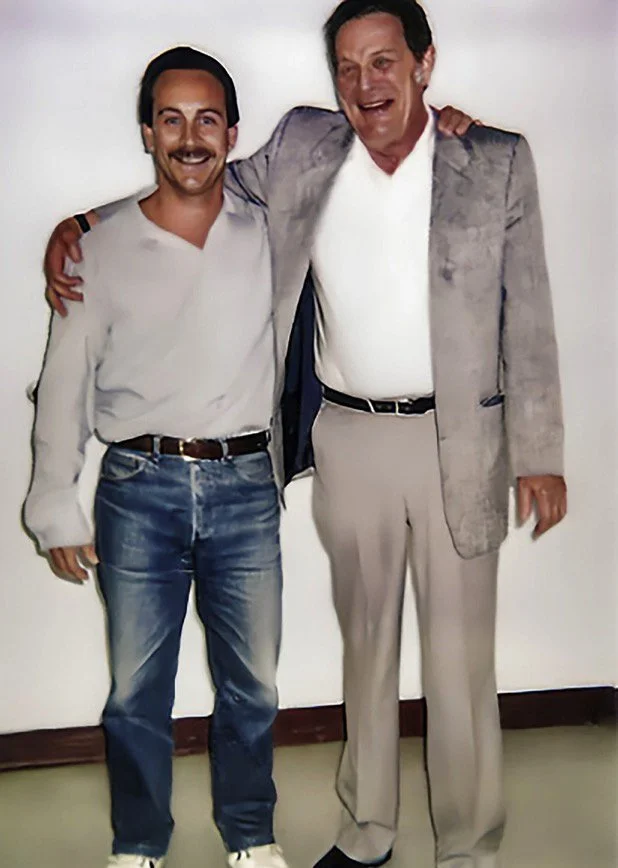
He died in 1995—fourteen years before the Federal District Court overturned my conviction. He did not see the Los Angeles Times articles that, a decade after his death, would begin to unravel the lie. He did not see Detective Monsue retire under accusation of misconduct in his son's case. He did not see the day I walked out the gate.
He did not need to see any of it.
He had held the line from the inside—for the twelve years he had—alone with his certainty, alone with his son, in the face of an investigation, a trial, a verdict, an appellate denial, a state supreme court denial, and the silence of too many of those he had counted on. He never wavered. He did not need to live long enough to be vindicated by anyone outside the family to know what he had always known: that the boy he had raised had not killed his wife.
He went out with that knowledge intact.
And the two men who had tried to bury me—neither of them ever, in any sworn statement or public utterance, in over forty-three years, said the words: I was wrong.
Three Marines. One stood. Two broke. The Core Values were never the property of the two who broke them. They were the property, every day until the day he died, of the one who lived them.
They are the property, today, of every Marine still wearing the uniform—and of one Marine, gone now, whose son still tries every day to live worthy of him.
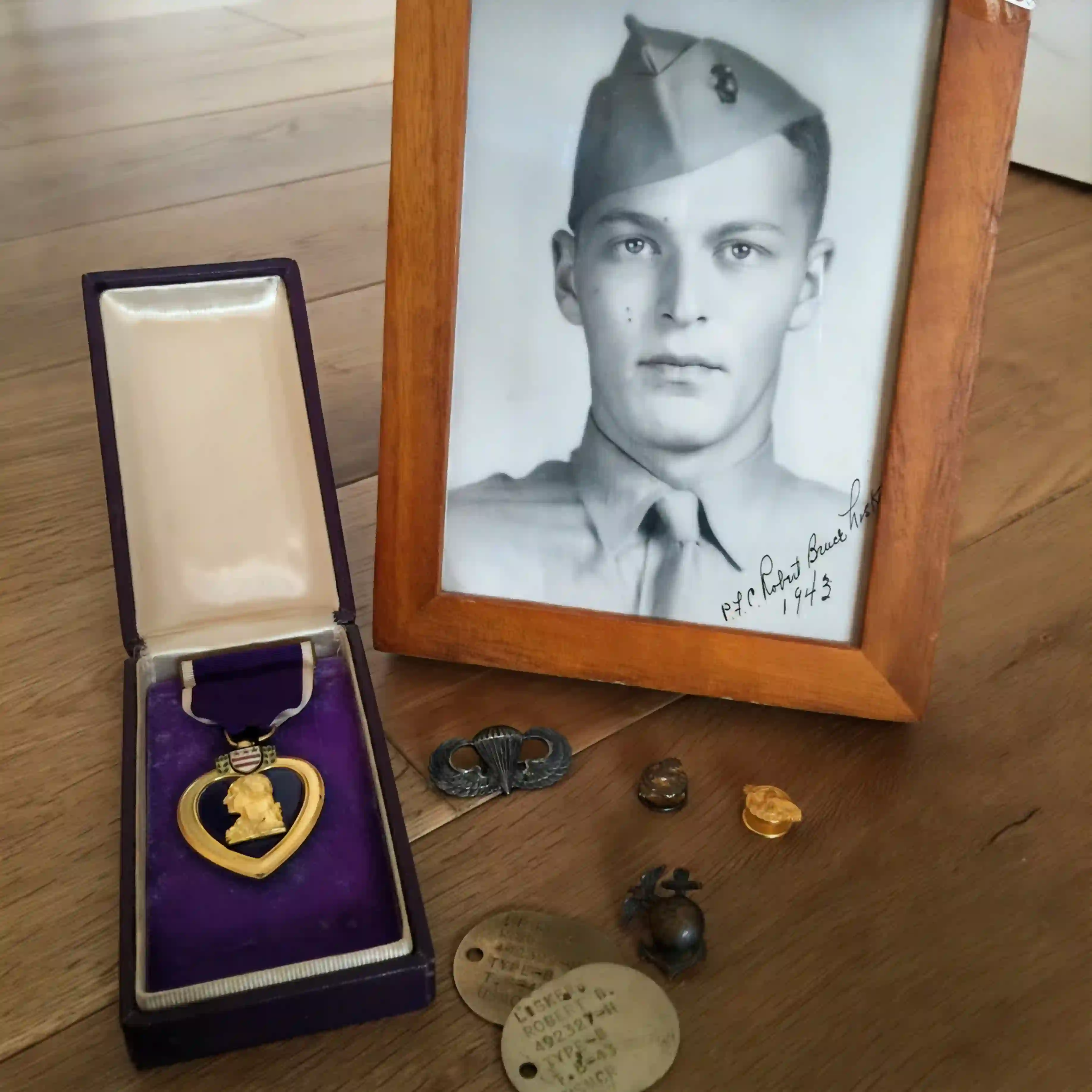
SEMPER FIDELIS.
Robert Hughes's three-murder informant history, his Marine Corps service, his post-release mental-health record, his “Robert the robber” check, and his 2005 statements quoted above are documented in “Informant's Past Shadows His Testimony from '85 Murder Trial,” Los Angeles Times, October 31, 2005. Det. Andrew Monsue's Marine Corps and LAPD service, his Mississippi tape with Mike Ryan, his treatment of Robert Hughes, his 1998 parole-board letter to the California Board of Prison Terms (and Morton P. Borenstein's sworn refutation of its central factual claim), and Monsue's own 2005 statements are documented in the LA Times' five-part special report, “The Evidence Seemed Overwhelming Against Bruce Lisker—But Was Justice Served?” (May 22, 2005), and in “Detective Accused of Misconduct to Retire” (June 7, 2005). LAPD Chief William J. Bratton's June 23, 2005 letter to the California Board of Prison Terms asking the Board to remove and disregard Det. Monsue's 1998 parole-board letter, and Bratton's accompanying statement that he did not want the parole board making a decision based on information the LAPD could not corroborate, are reported in “Bratton Enters Lisker's Legal Battle” by Matt Lait and Scott Glover, Los Angeles Times, November 23, 2005. The 2002 $1.25 million settlement of Sgt. Diane Tostado's lawsuit against the LAPD is documented in “City Settles LAPD Officer's Lawsuit for $1.25 Million” (October 17, 2002). The Los Angeles City Council's January 19, 2016 approval of a $7.6 million settlement of my federal civil-rights lawsuit against the City of Los Angeles for my wrongful 26-year incarceration is reported in “L.A. Set to Settle With Man Wrongly Convicted of Killing Mother” by Matt Lait, Los Angeles Times, October 19, 2015 (reporting the tentative agreement), and in “L.A. to Pay Total of $24 Million” by Emily Alpert Reyes and Matt Lait, Los Angeles Times, January 19, 2016 (reporting the City Council's approval that day, the $7.6 million amount, and the parallel $16.7 million settlement of Kash Delano Register's wrongful-conviction case). Additional contemporaneous reporting: “Bruce Lisker Gets Settlement from the City” by Iris Schneider, LA Observed, January 19, 2016. The FBI Quantico laboratory's conclusion that the bloody footprint was not Lisker's shoe is documented in “Shoe Print at Crime Scene Not Lisker's, FBI Confirms” (August 18, 2005). Phil Rabichow's sworn concession of doubt is reported in “Prosecutor in Lisker Case Concedes Some Doubts” (December 2, 2005). The findings on perjury, fabricated confessions, and the “snitch tank” are quoted from the Report of the 1989–1990 Los Angeles County Grand Jury on the Investigation of the Involvement of Jail House Informants in the Criminal Justice System in Los Angeles County (June 26, 1990). NOAA archived weather data for the Sherman Oaks area on March 10, 1983 is part of the federal record in the habeas proceedings. The wrongful conviction in this case was overturned by the United States District Court for the Central District of California in 2009.